


At the South Placer Fire District, transparency to the taxpayers and the community we serve is paramount, and we take it extremely seriously. Our service to you, at its core, is a relationship built on trust. We are always seeking to improve our service delivery and response times, but also continuously striving to be as transparent as possible on any given day around the District’s finances, operations, personnel and more.
We’ve created this page to make it easy for the public and other stakeholders to dive into our financial reports, view our 2024 Voter Attitudinal Awareness Survey including all community comments, read our 2024 Strategic Plan which includes areas for improvement, as well as our 2024 Master Plan.
District Financials
Financial Data & Reporting
Master Plan
South Placer Fire District Master Plan: Community Risk Assessment, Standards of Cover, May 2024
YOUR FIRE PROTECTION SERVICE AT RISK
Every day, South Placer Fire District protects the families, homes, and businesses in Granite Bay, Loomis, and parts of Roseville. Our firefighters respond 24/7, saving lives during medical emergencies, fighting structure and wildland fires, and protecting our community against a variety of other crises.
But that protection is at risk.
In August 2022, Stations 15 and 19 Were Forced to Close. Why?
The short answer? A lack of funding.
- FEMAs Staffing for Adequate Fire and Emergency Response (SAFER) grant funding expired.
- The District continued to fund these positions on its own for 2 more years by using general revenue funds.
- A 2022 funding measure failed because it did not receive the necessary threshold of voter approval.
- Continued deficit spending would have depleted emergency reserves.
A Step Forward, Not the Final Fix
Through operational savings, the ambulance from station 20 was moved to Station 19 in March 2025 opening it with ambulance service only. Funding shortfalls continue to prevent the station from fully reopening. Moving the ambulance-only service, to our busier call for service area, ensures we are ready to respond for to residents experiencing medical emergencies.
80%
OF THE CALLS SPFD RECEIVES ARE FOR MEDICAL EMERGENCIES.
WHY EMERGENCY SERVICES ARE UNDERFUNDED
Where Your Fire District Dollars Go
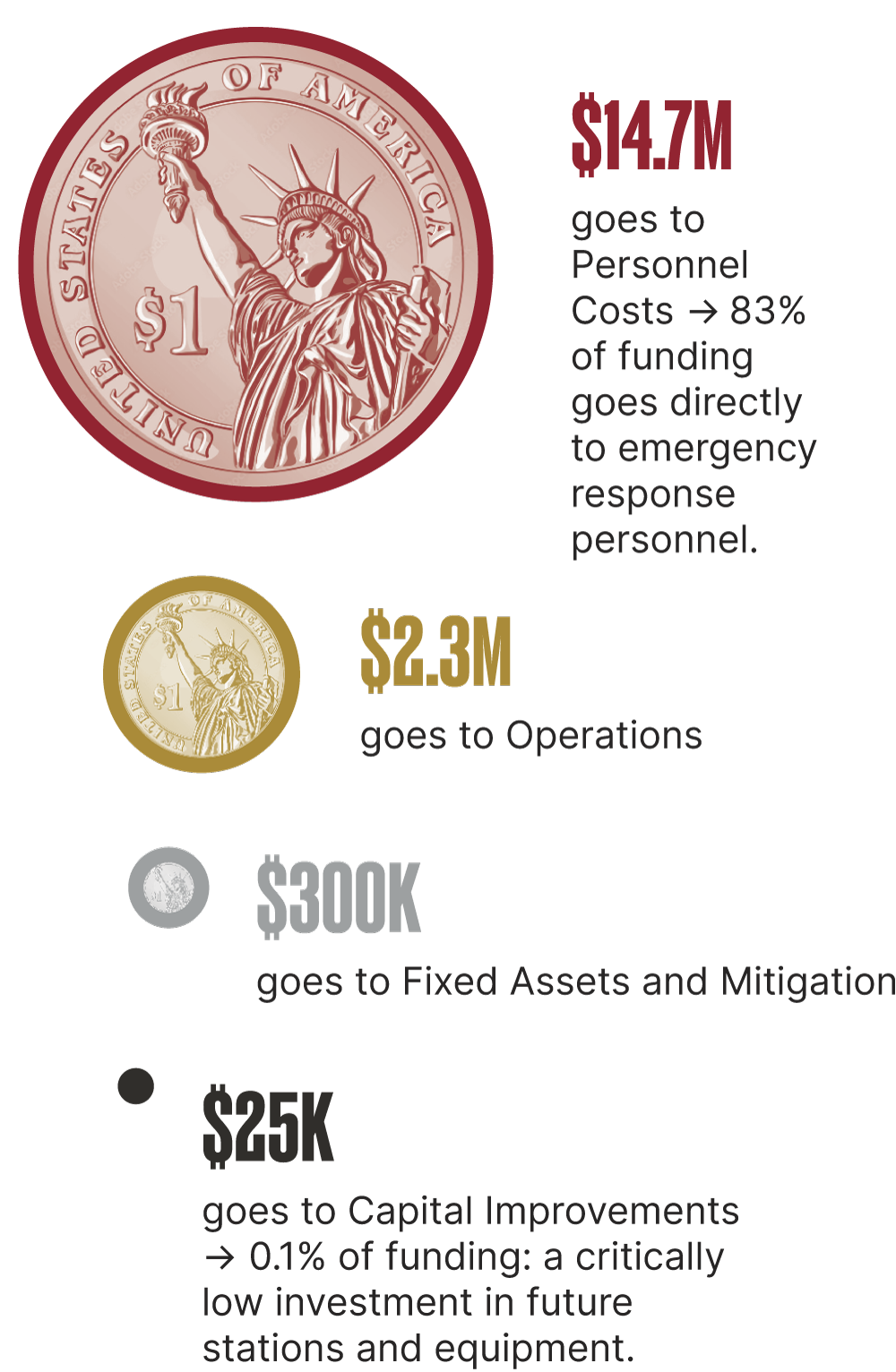
WHAT IT COSTS TO KEEP YOU SAFE
Basic emergency readiness is impacted by inflation and aging equipment.
Essential equipment costs have DOUBLED in just 4 years.
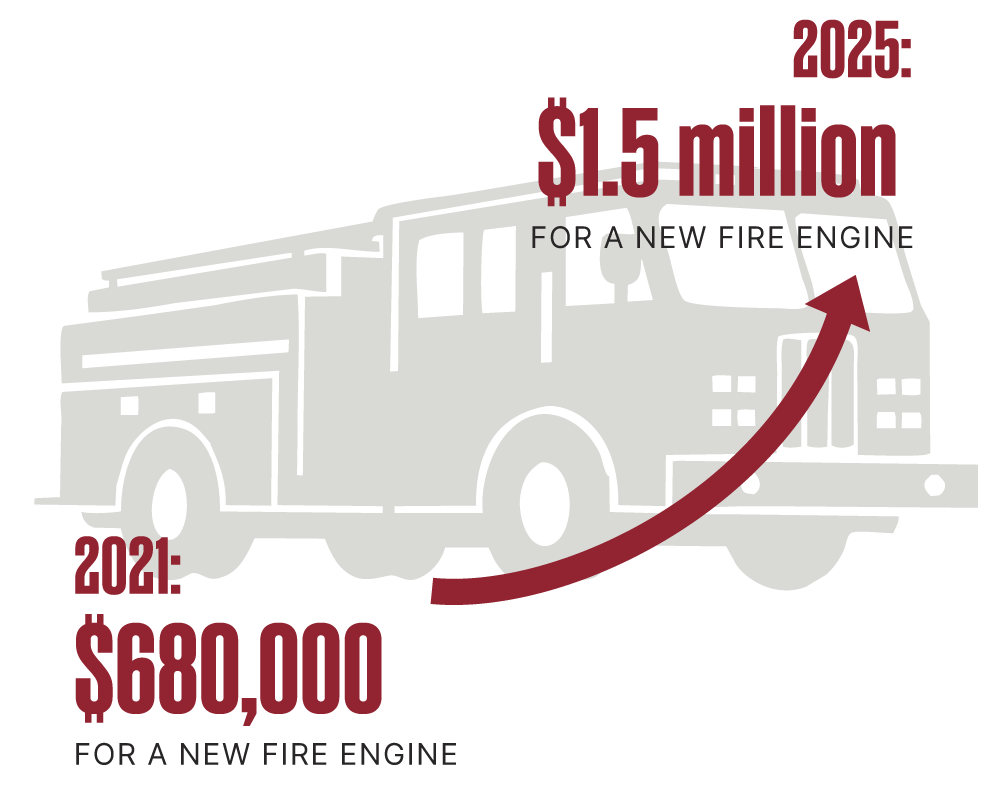
REALITY CHECK: At today’s rates, our $25,000 capital improvement budget would take 60 years to purchase just 1 new engine.
Annual cost to run one station:
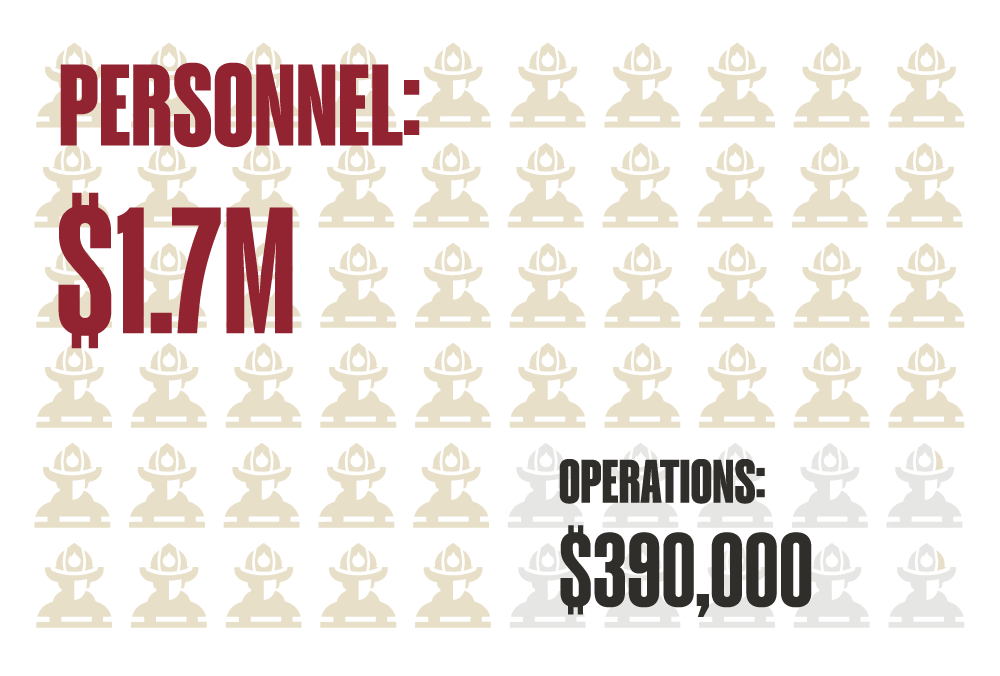
The Funding Gap Challenge
Projected revenue for FY 2025–26 is $17.5M, but this includes statutorily-restricted funds which can only be used to cover costs directly related to increased demand from new development and not personnel costs.
The District’s essential expenses total $17.3M, leaving just $200,000 to:
- Replace aging equipment.
- Fully reopen closed stations.
- Address increasing call volumes.
- Prepare for growing wildfire threats.
- Provide specialized training.
- Offer competitive salaries/benefits to increase recruitment and retention.
YOUR COMMUNITY. YOUR SAFETY.
For Homeowners
- Faster response times and strategic coverage means less property damage, even during wildfire season.
- Properly staffed stations help maintain and possibly lower insurance costs.
- Strong fire services preserve neighborhood property values.
For Families
- Rapid medical response when seconds count for loved ones.
- Educational community programs that teach children fire safety and inspect child safety seats.
- Emergency Support for senior residents in our communities.
For Businesses & Recreation
- Specialized, rapid response for commercial property protection that also reduces business interruption.
- Expert consultation for your emergency planning needs.
- Rescue and support for emergencies and accidents at Folsom Lake.
Wildfire Protection: A Growing Concern
- Placer County has more habitable structures in fire-prone wildland-urban interface (WUI) areas than any other county in California.
- Response time is critical for containing wildland fires before they threaten homes.
- Modern equipment is needed for effective wildfire response.
- Prevention programs help reduce human-caused fires.
WUIs are where homes, neighborhoods, and other infrastructure meet wildland vegetation and undeveloped natural land.
Our Priorities for Sustainable Service
In spite of our widening funding gap, the priorities for a fully funded SPFD are:
- Increase to 3 personnel on all fire engines.
- Modernized equipment and specialized training to best combat today’s emergency challenges, beyond standard fire emergencies.
- Continued compliance with unfunded state mandates.
- Streamlined organization of resources for optimal response times.
- Educational prevention programs, home hardening, wildfire prevention education, and removal of flammable vegetation efforts.
- Competitive salaries and benefits to retain and attract the best firefighters, medics and support staff to keep our community safe for years to come.
Doing Our Part to Maintain the Best Possible Service
- Secured $1.3M in competitive grants for equipment and training.
- Increased ambulance revenue by approximately $600,000 annually through improved billing practices.
- Optimized administrative positions and reduced overhead costs.
- Deferred non-essential capital improvements to prioritize emergency response.
- Cross-trained personnel to retain and recruit the best firefighters, medics and support staff.
We continue to do all we can to reduce spending while exploring alternate funding mechanisms keeping the community safe, but it just isn’t enough.